
Hand condition guide
Trigger finger and trigger thumb
Trigger finger, known medically as stenosing tenosynovitis, happens when a tendon that bends the finger or thumb catches as it slides through a tight band at the base of the digit. It can cause clicking, catching or a finger that locks bent. It is common, is usually diagnosed in clinic without scans, and often settles with simple measures, an injection or a short day-case procedure.

Written by Mr Alistair Jepson
Consultant Orthopaedic Surgeon · GMC 4104128
What is trigger finger?
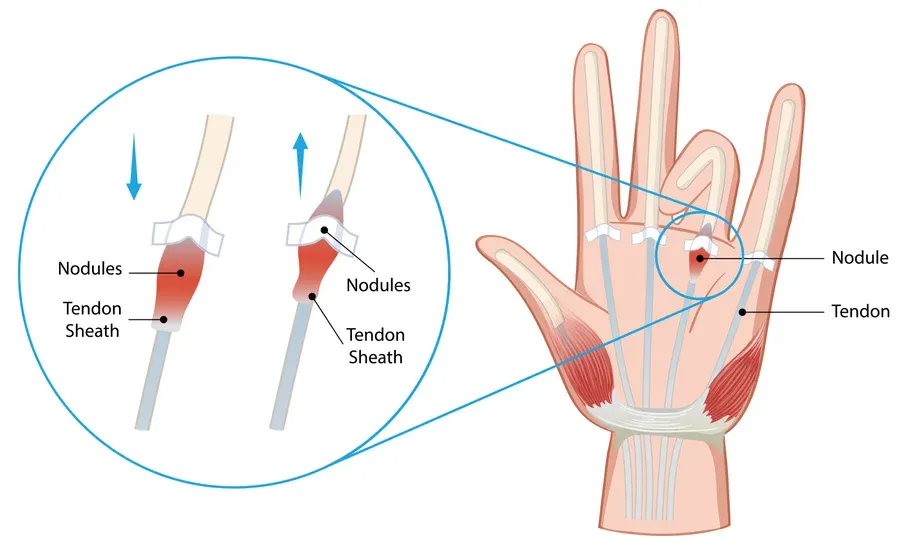
Each finger and the thumb is bent by flexor tendons that run from the forearm, through the palm and into the digit. Along the way, each tendon slides inside a smooth, lubricated tunnel called the tendon sheath.
The sheath is held close to the bone by a series of tough bands called pulleys. The first of these, the A1 pulley, sits at the base of the finger, just where it meets the palm.
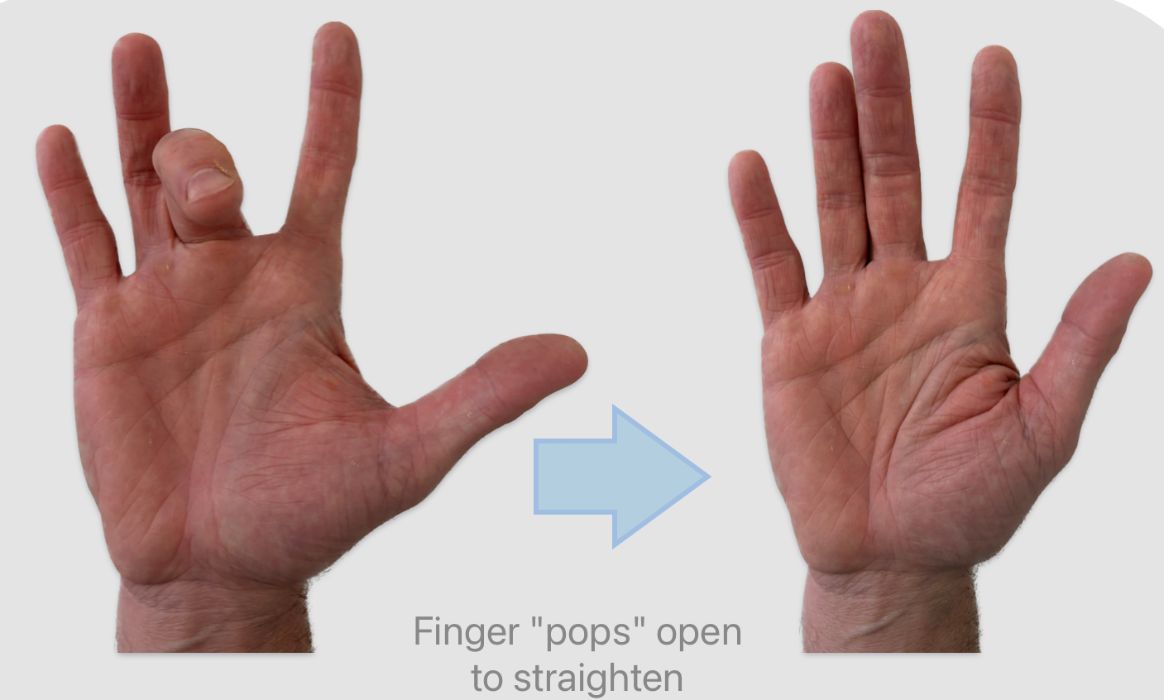
In trigger finger the tendon or its lining becomes thickened, sometimes forming a small nodule. Instead of gliding smoothly, the thickened part catches on the edge of the A1 pulley, then suddenly pops through. That snap is the "trigger". The same problem in the thumb is called trigger thumb.
Why the finger needs pulleys: a fishing rod under load
The tendons that bend your finger run from the forearm muscles to the finger bones, rather like a fishing line running along a rod. When a fish pulls, the rod bends, and the line guides (the eyes along the rod) keep the line close to it. Without them, the line would lift away in a straight line and pull far less efficiently.
Your finger works in the same way. A series of tough, smooth bands called pulleys hold the tendon close to the bone, a bit like cable ties holding an electrical cable neatly against a frame, so the finger bends strongly and smoothly.
In trigger finger, the first pulley at the base of the finger (the A1 pulley in the diagram above) thickens and narrows, and the tendon can swell into a small nodule. It is like a knot in the line catching on the first eye of the rod. The tendon sticks, then suddenly snaps through, which causes the click, catching or locking.
Trigger finger or Dupuytren's contracture?
People sometimes mix the two up. Both can make a finger bend towards the palm, and both can cause a lump in the palm. They behave quite differently, though, and are treated differently.
Watch: trigger finger or Dupuytren's?
This short clip covers both conditions and shows the simple signs that tell them apart: a finger that clicks or locks but can be straightened points to trigger finger, while a painless bend from a cord in the palm that will not straighten points to Dupuytren's. For more on the second condition, read the guide to Dupuytren's contracture.

Trigger finger
- The finger catches, clicks or locks, and may snap straight.
- It is often painful, especially at the base of the finger.
- The finger can usually be straightened with the other hand.
Dupuytren's contracture
- A gradual, usually painless bend caused by thickened cords under the skin of the palm.
- The finger cannot be fully straightened, even with help.
- There is no clicking or locking.
The two conditions can occur together in the same hand, and an examination in clinic usually tells them apart. To learn more about the other condition, read the guide to Dupuytren's contracture and its treatments.
Symptoms
Trigger finger can affect any finger, though the ring finger and thumb are common. More than one digit, and both hands, can be involved.
-
Clicking or catching
A click or snap as the finger bends or straightens, sometimes painful.
-
Locking
The finger sticks bent and has to be straightened with the other hand.
-
A tender lump
A small, tender lump in the palm at the base of the finger or thumb.
-
Worse in the morning
Stiffness and catching are often worst on waking and ease as the day goes on.
-
When to seek advice
If a finger locks and you cannot straighten it, if symptoms are affecting work, sleep or daily tasks, or if you also have numbness or tingling in the hand, it is worth having it assessed.
What causes it?
Often there is no clear cause. Trigger finger is not usually the result of an injury, and it is not something you have done wrong. Some people are more likely to develop it than others.
More common in
- People in middle age
- Women
- People with diabetes
- People with rheumatoid arthritis
Often seen alongside
- Carpal tunnel syndrome Numbness and tingling from pressure on the median nerve at the wrist.
- Dupuytren's contracture Thickened cords in the palm that gradually pull a finger bent.
If you have more than one of these, Mr Jepson can assess them together at the same appointment and, where appropriate, plan treatment for both.
How it is diagnosed
Trigger finger is usually a clinical diagnosis, made from your story and a careful examination of the hand.
-
1
Your history
Which fingers are affected, when the catching happens, and any related conditions such as diabetes.
-
2
Examination
Feeling for a tender nodule in the palm and watching the finger catch as you make and release a fist.
-
3
Scans, if needed
Scans are rarely needed. Ultrasound is occasionally used if the picture is unclear or another cause is suspected.
Read more about ultrasound and other scans on the imaging and scans page.
Non-surgical treatment
Mild trigger finger may settle on its own over time. Simple measures are a sensible first step, particularly when symptoms are new or only occasional.
Activity change
Easing off repeated hard gripping and tools that press into the palm can calm the tendon.
Night splint
A small splint that holds the finger straight overnight can reduce morning locking.
Trigger finger splints
A trigger finger splint is a small splint that holds the knuckle (MCP) joint of the affected finger straight or slightly bent, leaving the other finger joints free to move. Resting the tendon in this way lets the swelling around the tendon sheath settle, so the tendon can glide through the pulley more easily.
It is usually worn at night, and sometimes during the day, for several weeks as advised by your hand therapist. A splint is most helpful for milder or more recent triggering, and can be used on its own or alongside a steroid injection.
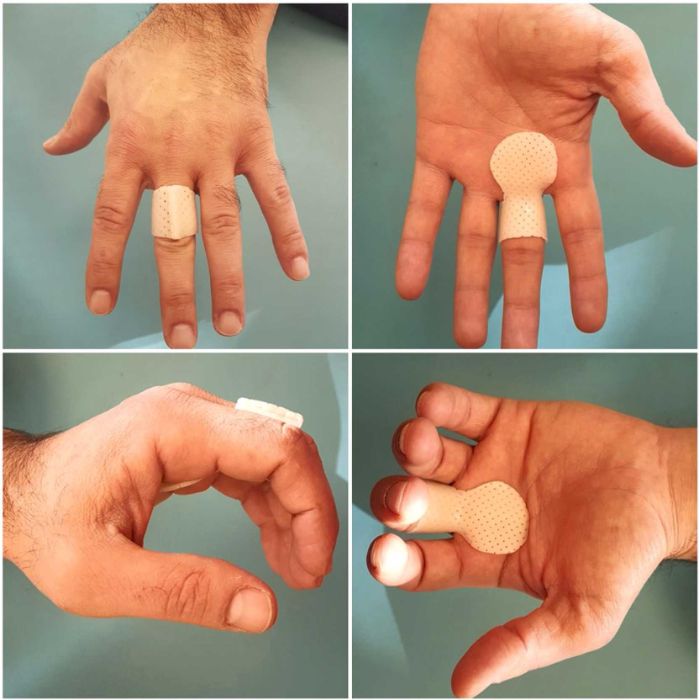
How to wear your splint
-
1
Snug, not tight
It should fit snugly but not tightly, so a fingertip slides under the strap.
-
2
Check your skin
Look for any rubbing or red marks, especially around the edges of the splint.
-
3
Take it off to wash and exercise
Remove the splint to wash your hand and for the gentle exercises your hand therapist shows you.
Steroid injection
A steroid injection into the tendon sheath at the base of the finger reduces swelling around the tendon, so it can glide through the pulley more easily. It is a quick procedure that can be done in clinic.
An injection may settle the triggering, though it can take a few weeks to work. Sometimes the symptoms return and the injection needs repeating, or surgery may be the better option. Mr Jepson will talk you through which approach suits your hand.
Trigger finger release
When triggering keeps coming back, the finger locks, or an injection is not suitable, a trigger finger release frees the tendon so it can glide smoothly again.
Day case
You go home the same day. The procedure itself is short.
Local anaesthetic
The hand is numbed and you stay awake, so there is no need for a general anaesthetic.
Small palm incision
Through a small cut in the palm, the A1 pulley is divided so the tendon glides freely.
Mr Jepson can check during the procedure that the finger moves fully without catching. Dividing the A1 pulley does not weaken the finger, as the other pulleys further along keep the tendon in place.
Back to the fishing rod
Release surgery divides only that one tight first pulley, like snipping one tight cable tie or widening the first guide on the rod. The other pulleys further along the finger are left in place, so the tendon still stays close to the bone and the finger keeps its strength.
To see what happens on the day of your operation, from pre-assessment to the local anaesthetic and going home, read the day of surgery guide.
Watch: how a trigger finger release is done
This short clip shows the operation: through a small cut in the palm, the tight A1 pulley is divided so the tendon can glide freely again. It contains surgical footage, so skip it if you would rather not watch.

Consent with Concentric
Before any operation, Mr Jepson talks you through the benefits, risks and alternatives. The practice uses Concentric, a secure digital consent system, so you can read about your operation at home, ask questions and record your decision. Your consent is confirmed again on the day. Read more in the day of surgery guide.
Recovery and risks
Recovery after a trigger finger release is usually straightforward. You will be given clear instructions before you go home.
-
1
Move the finger straight away
Gently bending and straightening the finger from the day of surgery helps prevent stiffness.
-
2
Keep the dressing dry
Keep the wound clean and dry until it has healed. Light use of the hand is fine.
-
3
Stitches out at around two weeks
The scar may feel tender for a while. This usually settles gradually, helped by gentle massage once healed.
-
4
Hand therapy if needed
If the finger is slow to loosen up, a hand therapist can guide exercises to restore movement.
-
5
Driving and work
When you can drive and return to work depends on your hand and your job, and is discussed with you individually.
Common questions
If your question is not answered here, call the practice on 01604 633730 or send an enquiry.
Is trigger finger serious?
It is not dangerous, but it can be painful and frustrating. A finger that stays locked bent for a long time can become stiff, so it is worth seeking advice rather than leaving it indefinitely.
Will it go away on its own?
Mild cases sometimes settle with rest from gripping and a night splint. If the finger keeps catching or locking, an injection or a release is usually more reliable.
Can I have more than one injection?
An injection can be repeated if the first one helps but symptoms return. If triggering keeps coming back, Mr Jepson may suggest a release rather than further injections.
Can several fingers be treated at the same time?
Often, yes. More than one finger on the same hand, or a trigger finger together with carpal tunnel syndrome in that hand, can sometimes be treated in the same sitting. Only one hand is treated at a time, though, so you always have one free hand for everyday tasks while you recover. If both hands are affected, the second hand is treated once the first has settled. This is planned with you at your consultation.
How soon can I use my hand after surgery?
You are encouraged to move the finger straight away and use the hand for light tasks while the wound heals. Heavier gripping is built up gradually once the stitches are out.
Looking for a different problem? Browse all shoulder, elbow, hand and wrist conditions.
Related conditions
These hand problems often appear alongside trigger finger or are mistaken for it.
- Dupuytren's contracture Thickened cords in the palm that gradually pull a finger bent. Read the guide
- Carpal tunnel syndrome Numbness and tingling from pressure on the median nerve at the wrist. Read the guide
- Finger arthritis: DIP, PIP and MCP joints Wear in the finger joints causing pain, swelling and stiffness. Read the guide
- Thumb base (CMC) arthritis Aching at the base of the thumb, worse with pinching and gripping. Read the guide
Talk to the practice about your shoulder, elbow, hand or wrist
Call to arrange a consultation, book online for Circle Three Shires Hospital in Northampton, or send a short email and the practice team will come back to you.
Read independent patient reviews on Doctify (opens in a new tab), iWantGreatCare (opens in a new tab) or Google reviews (opens in a new tab)