
Upper Limb Clinic logo

Wrist

TFCC tears and ulnar carpal impaction

Pain on the little-finger side of the wrist, especially when you grip, twist or push up from a chair, is often caused by a problem with the TFCC. This guide explains what the TFCC is, why it tears, how ulnar carpal impaction is linked, and the treatments Mr Jepson offers.

Mr Alistair Jepson

Written by Mr Alistair Jepson
Consultant Orthopaedic Surgeon · GMC 4104128

The anatomy

What is the TFCC?

The triangular fibrocartilage complex, or TFCC, is a small cushion of cartilage and ligaments on the little-finger (ulnar) side of the wrist. It sits between the end of the ulna, one of the two forearm bones, and the small bones of the wrist.

It does two important jobs. It holds steady the joint between the two forearm bones near the wrist, called the distal radioulnar joint (DRUJ), which lets you turn your palm up and down. It also absorbs and passes on load when you grip, lift or lean on your hand.

Because it works so hard in everyday movements, a torn or worn TFCC can make simple tasks surprisingly painful.

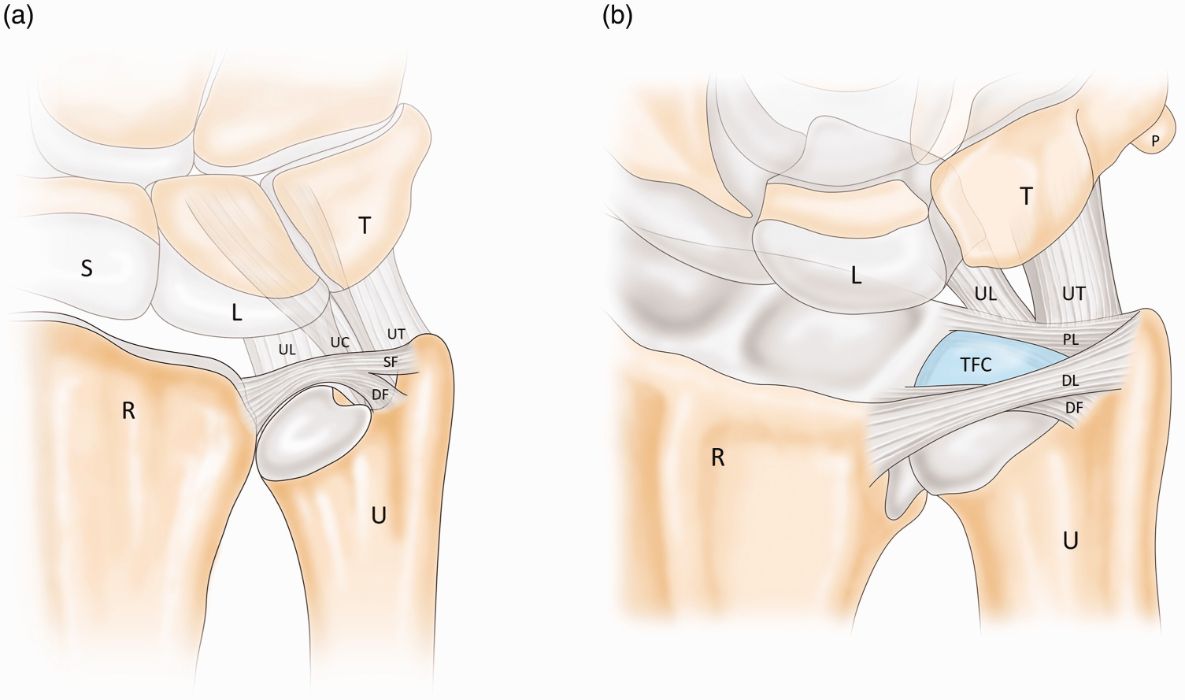
Diagram of a normal triangular fibrocartilage complex (TFCC) in the wrist
A normal TFCC, the cushion of cartilage and ligaments on the little-finger side of the wrist.

What you may notice

Symptoms of a TFCC tear

Symptoms vary from a dull ache to sharp pain with certain movements. Common signs include:

  • Pain on the little-finger side of the wrist
  • Clicking, clunking or catching when you move the wrist
  • A weaker grip, or dropping things
  • Pain turning a key, a door handle or opening a jar
  • Pain pushing up from a chair or leaning on your hand
  • A feeling that the wrist is loose or unstable

If your wrist is badly swollen, misshapen or too painful to move after a fall, it may be broken. Please go to your nearest A&E or urgent treatment centre first.

Why it happens

Injury or gradual wear

TFCC tears fall into two broad groups. Knowing which one you have helps guide the right treatment.

Traumatic tears

These follow an injury, most often a fall onto an outstretched hand or a forceful twisting movement, such as a drill or racket jarring the wrist. A TFCC tear sometimes happens at the same time as a wrist fracture and may only become noticeable once the fracture has healed.

Degenerative wear

The TFCC naturally thins with age, and in some people it slowly wears through without any single injury. This kind of wear is often linked to ulnar carpal impaction, where the ulna presses too hard on the TFCC and wrist bones, explained below.

A related condition

Ulnar carpal impaction

Normally the two forearm bones, the radius and the ulna, end at roughly the same level at the wrist. In some people the ulna is relatively long compared with the radius. This is called positive ulnar variance. It can be something you are born with, or it can develop after a wrist fracture heals with the radius slightly shortened.

A longer ulna puts extra pressure on the TFCC and on two of the small wrist bones, the lunate and the triquetrum. Over time this can thin or tear the TFCC and wear away the smooth cartilage on the bones.

Symptoms usually build gradually rather than after one injury. The ache is felt on the little-finger side of the wrist and is typically worse when gripping firmly and twisting, for example wringing out a cloth or using a screwdriver.

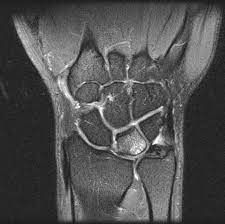
MRI scan of the wrist showing ulnar carpal impaction
An MRI scan can show early changes in the lunate bone where the end of the ulna presses against it, often before anything is visible on an X-ray.
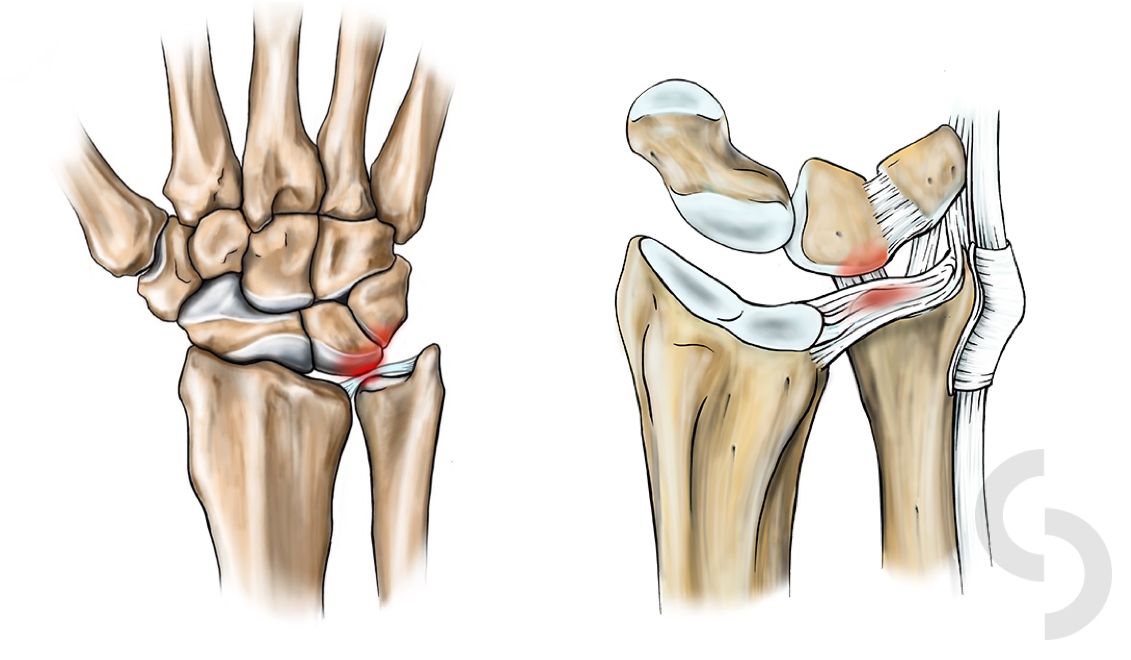
Diagram of ulnar carpal impaction, with a long ulna pressing on the wrist bones
With positive ulnar variance, the end of the ulna presses on the TFCC and the lunate and triquetrum bones.

Finding the cause

How a TFCC tear is diagnosed

Several structures sit close together on the little-finger side of the wrist, so a careful assessment matters. Mr Jepson usually works through three steps.

  1. 1

    History and examination

    A conversation about how the pain started and what makes it worse, then a gentle examination of the ulnar side of the wrist, including pressing over the TFCC and checking how stable the DRUJ is when you turn your forearm.

  2. 2

    X-ray

    X-rays rule out a fracture or arthritis and allow the ulnar variance to be measured, showing whether the ulna is longer than the radius. A view taken while gripping can show how this changes under load.

  3. 3

    MRI or MR arthrogram

    An MRI scan shows the TFCC, ligaments and bone. An MR arthrogram, where contrast dye is injected into the wrist first, can show smaller tears more clearly. Read more about imaging and scans.

Wrist arthroscopy

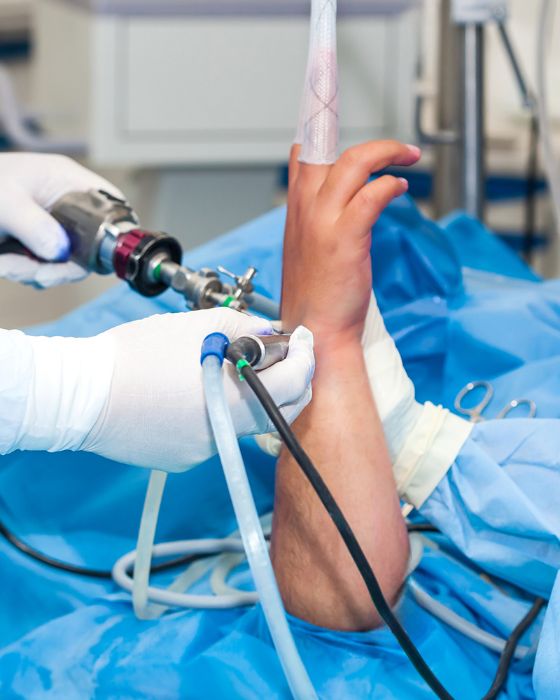
Scans do not always show everything. Wrist arthroscopy, a keyhole operation using a small camera, is the most accurate way to see the TFCC directly, and it often allows a tear to be treated during the same procedure.

Wrist arthroscopy set-up in theatre
Set-up for wrist arthroscopy: the hand is supported upright so the camera can be passed into the wrist through tiny incisions.
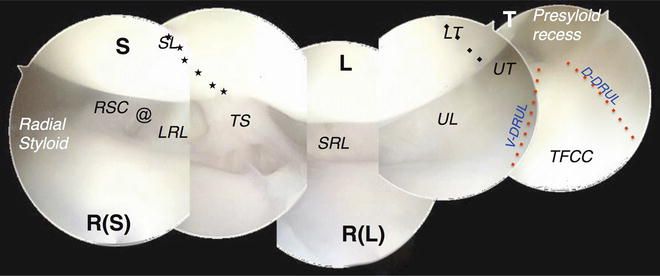
View inside the radiocarpal joint of the wrist through the arthroscope
The view inside the radiocarpal joint, where the TFCC can be seen and probed directly.
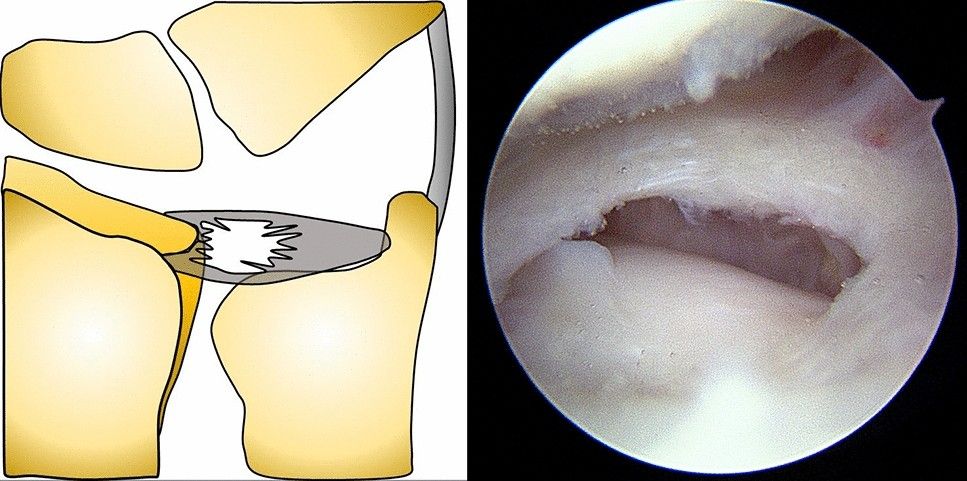
Illustration of a TFCC tear on the little-finger side of the wrist
A TFCC tear, which arthroscopy lets the surgeon see and assess directly.

First steps

Treatment without surgery

Many TFCC tears settle without an operation, particularly when the wrist is stable. Treatment usually starts with simple measures, given time to work.

  • Rest from aggravating activities

    Easing off heavy gripping, twisting and leaning on the hand for a while gives the TFCC a chance to calm down.

  • A wrist splint or support

    A splint limits painful twisting movements and supports the wrist while it settles.

  • Hand therapy

    A specialist hand therapist guides exercises to strengthen your grip and forearm muscles, which help support the wrist.

  • Anti-inflammatory painkillers

    If they are suitable for you, a short course can ease pain and swelling. Check with your GP or pharmacist first.

  • Ultrasound-guided steroid injection

    For some patients, a steroid injection placed accurately with ultrasound can settle inflammation and help with therapy.

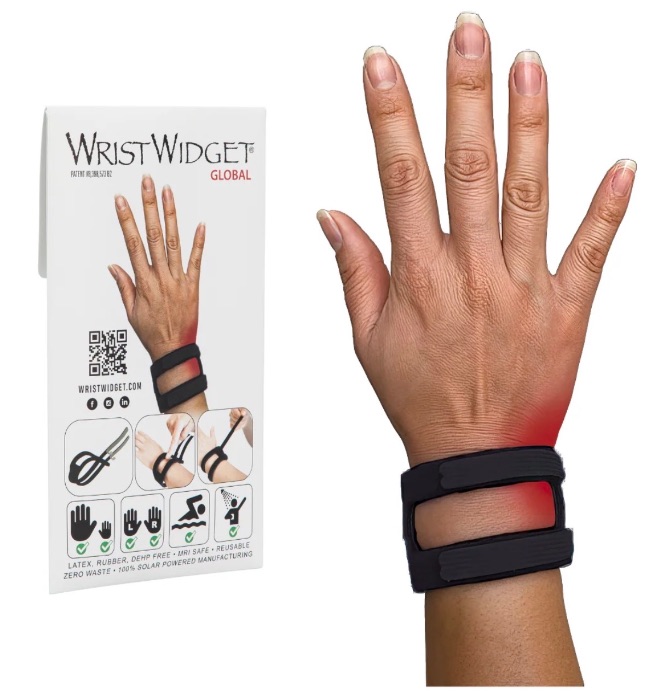
Wrist Widget splint worn around the wrist

A splint designed for the TFCC

Wrist Widget splint

The Wrist Widget is a slim, soft wrist support that wraps around the wrist just above the wrist joint. It gently squeezes the ends of the two forearm bones, the radius and the ulna, together and supports the little-finger side of the wrist. This steadies the distal radioulnar joint (DRUJ) and takes some of the load off the TFCC.

Unlike a rigid splint, it lets you keep using your hand and moving your wrist, while easing painful twisting and weight-bearing on the little-finger side.

Using it well

  • Wear it during activities that bring on your pain, such as lifting, twisting, pushing up from a chair, gym work or sport.
  • It should feel firm but not tight. Loosen it if your hand tingles, swells or goes numb.
  • It eases symptoms while the TFCC settles, and works best alongside your hand therapy exercises.
  • Mr Jepson or your hand therapist can advise on the right fit and how long to keep wearing it.
When symptoms persist

Surgical treatment

If pain continues despite non-surgical care, or the wrist is unstable, surgery may help. The right operation depends on the type of tear and whether ulnar carpal impaction is part of the problem.

For TFCC tears

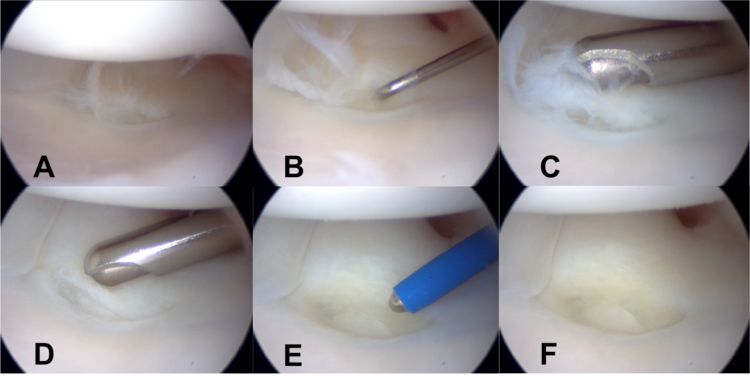
Arthroscopic debridement

Arthroscopic view of TFCC resection in the wrist
Arthroscopic resection: the frayed, unstable part of the TFCC is trimmed back to healthy tissue.

A keyhole procedure to trim and smooth a frayed tear, removing the loose edges that catch and cause pain. It suits tears in the centre of the TFCC, which has a poor blood supply and does not tend to heal when stitched.

TFCC repair

Reattaching a torn TFCC to the bone, by keyhole or open surgery. Repair is considered especially when a tear at the edge of the TFCC has left the DRUJ unstable.

For ulnar carpal impaction

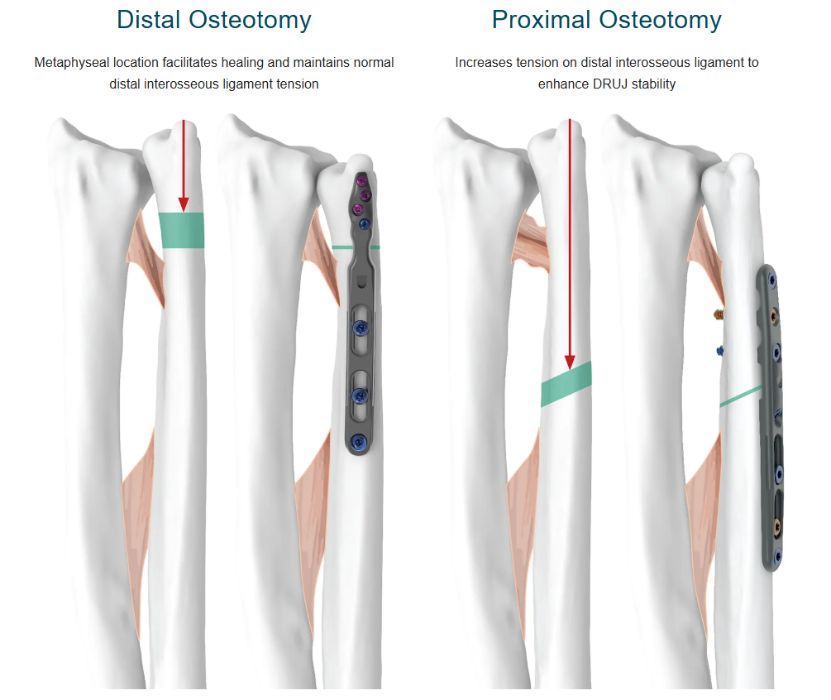
Ulnar shortening osteotomy

Ulnar shortening osteotomy of the forearm
The shortened ulna is held with a plate and screws while the bone heals.

The ulna is shortened by removing a small section of bone in the forearm, then held with a plate and screws while it heals. This takes pressure off the TFCC and wrist bones.

Arthroscopic wafer procedure

A keyhole operation that shaves a thin slice from the end of the ulna to relieve the pressure. It is often combined with treatment of a TFCC tear at the same time.

Every operation has benefits and risks. Mr Jepson talks these through with you individually, so you can decide together whether surgery is right for you and which option suits your wrist.

To see what happens on the day of your operation, from pre-assessment and fasting to the anaesthetic and going home, read the day of surgery guide.

After surgery

Recovery

Recovery depends on the operation you have. You will be given clear personal advice before and after surgery, and followed up until your wrist is working well again.

Splint or cast

A short period in a splint is usual after debridement. A repair or osteotomy needs longer protection in a cast or brace while things heal.

Hand therapy

Therapy is key to getting movement and grip strength back. Mr Jepson works closely with specialist hand therapists; meet Mr Jepson and his team.

Driving

When you can drive depends on the procedure and on being able to control the car safely. Check with your insurer too.

Work and activities

Desk work often resumes sooner than heavy manual work or sport. Your return is planned around your job and the operation.

Your questions

Common questions

If your question is not answered here, the practice team is happy to help.

Will a TFCC tear heal on its own?

Many tears settle with rest, a splint and hand therapy, even if the tear itself remains. Symptoms often ease as the wrist calms down and the surrounding muscles get stronger. Surgery is considered when pain persists or the wrist is unstable.

Is it the same as a wrist sprain?

Not quite. A TFCC tear is often first thought to be a sprain because it can follow the same kind of fall. If pain on the little-finger side of the wrist has not settled after a few weeks, it is worth having it assessed.

Is it related to carpal tunnel syndrome?

No. Carpal tunnel syndrome affects the median nerve on the thumb side of the wrist and mainly causes tingling and numbness in the fingers. A TFCC tear is a problem with cartilage and ligaments on the little-finger side. Read about carpal tunnel syndrome.

Do I need surgery?

Most people start with non-surgical treatment. Surgery is usually discussed when symptoms continue despite this, when the DRUJ is unstable, or when ulnar carpal impaction is wearing the wrist. Mr Jepson will explain the options and leave the decision with you.

What is ulnar variance?

Ulnar variance describes the length of the ulna compared with the radius at the wrist, measured on an X-ray. If the ulna is longer (positive variance), it can overload the TFCC and wrist bones, which is what causes ulnar carpal impaction.

Where can I be seen?

Mr Jepson sees patients privately at Circle Three Shires Hospital in Northampton and Woodland Hospital in Kettering. See clinic locations and directions.

Talk to the practice about your shoulder, elbow, hand or wrist

Call to arrange a consultation, book online for Circle Three Shires Hospital in Northampton, or send a short email and the practice team will come back to you.

Read independent patient reviews on Doctify (opens in a new tab), iWantGreatCare (opens in a new tab) or Google reviews (opens in a new tab)

© 2026 Mr Alistair Jepson · Powered by Carebit