
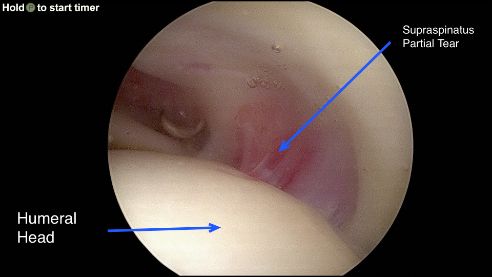
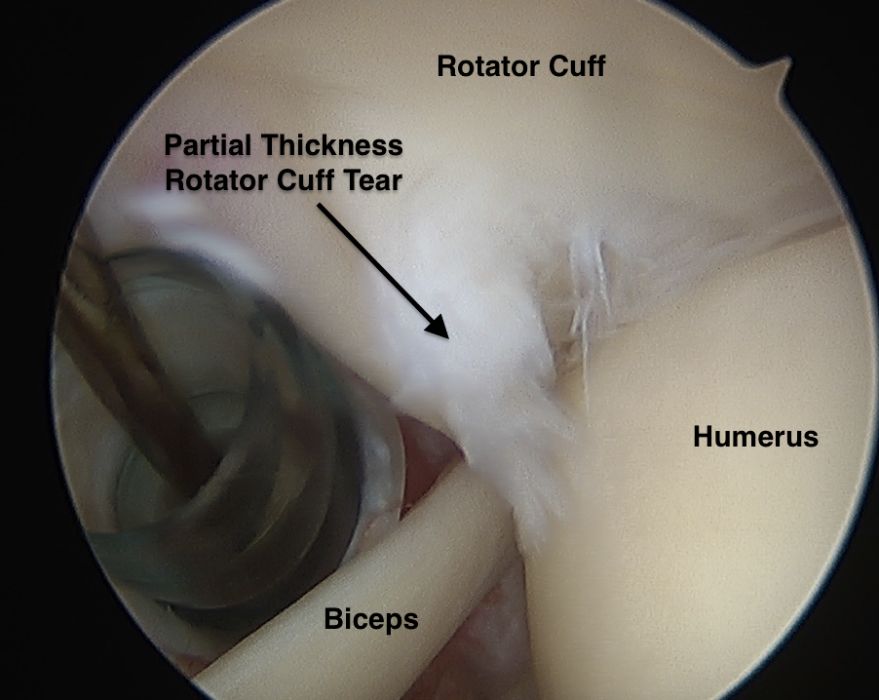
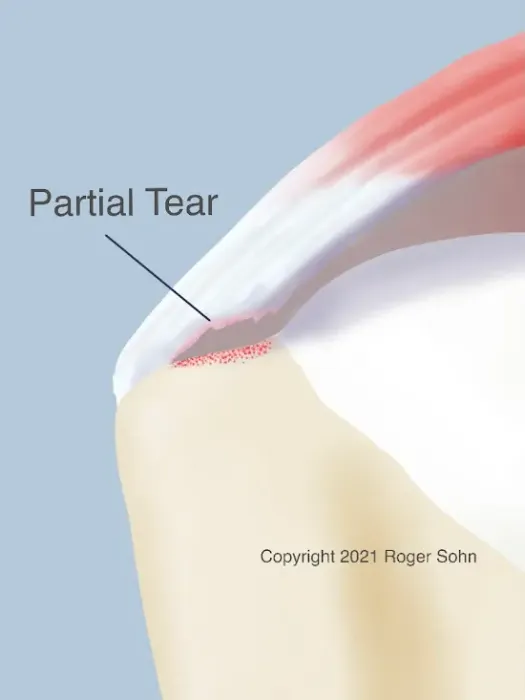
Partial-thickness tear
The tendon is frayed or partly torn, but it is still attached to the bone. Some of the tendon fibres remain intact, so strength is often reasonably well preserved, although the shoulder can be very painful.
Shoulder conditions
A rotator cuff tear is one of the most common causes of shoulder pain and weakness, particularly when lifting the arm or lying on the affected side. This guide from Mr Alistair Jepson, Consultant Orthopaedic Surgeon, explains the different types of tear, why many do not need an operation, and when surgery is worth considering.

Written by Mr Alistair Jepson
Consultant Orthopaedic Surgeon · GMC 4104128
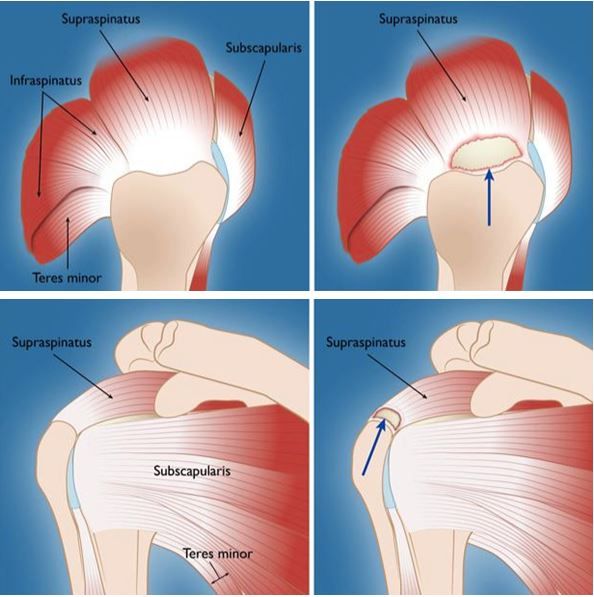
The shoulder is a ball-and-socket joint with a large ball and a shallow socket. That gives it a huge range of movement, but it relies on muscles rather than bone to stay stable. The rotator cuff is a group of four muscles whose tendons wrap around the ball like a cuff.
Runs over the top of the shoulder and helps lift the arm out to the side. It is the tendon most often torn.
Sits behind the shoulder and turns the arm outwards.
Lies at the front of the shoulder and turns the arm inwards.
A smaller muscle at the back that helps outward rotation.
Working together, these muscles keep the ball centred in the socket while the larger muscles, such as the deltoid, lift and rotate the arm. Like any tendon, the cuff tendons can wear with age and repeated use (known as tendinopathy), or tear suddenly after an injury.
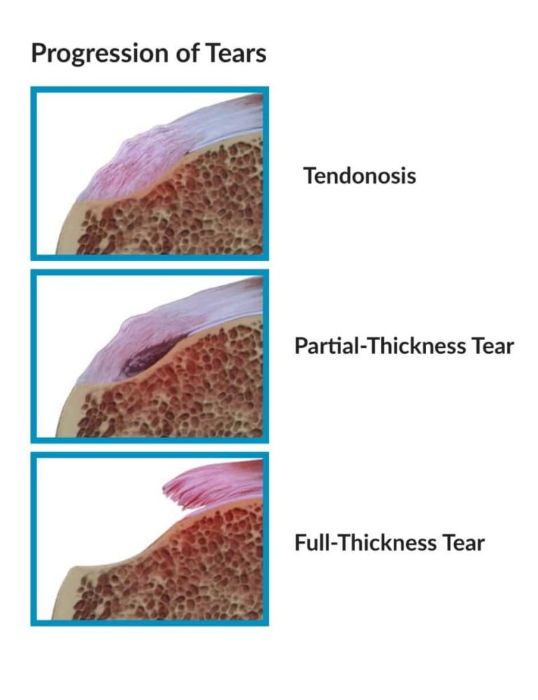
Tendinopathy, sometimes called tendinosis, describes wear and overload changes within a rotator cuff tendon. The tendon fibres become less organised, thickened and less able to cope with load, but the tendon has not torn through.
It sits at one end of a spectrum. A tendon with tendinopathy can go on to fray on one surface, a partial-thickness tear, and in some people a hole eventually forms right through it, a full-thickness tear. Many people never move along this spectrum, and changes seen on a scan do not always match how the shoulder feels.
Most cases improve without surgery. Treatment usually combines adjusting the activities that flare the pain, a structured physiotherapy and strengthening programme, simple painkillers and sometimes an image-guided injection to settle pain so exercise can progress. Surgery is considered only when symptoms persist despite good non-surgical care, or when a tear develops.
Tears are described by how far they go through the tendon. This makes a real difference to symptoms and to the treatment Mr Jepson will recommend.
The tendon is frayed or partly torn, but it is still attached to the bone. Some of the tendon fibres remain intact, so strength is often reasonably well preserved, although the shoulder can be very painful.
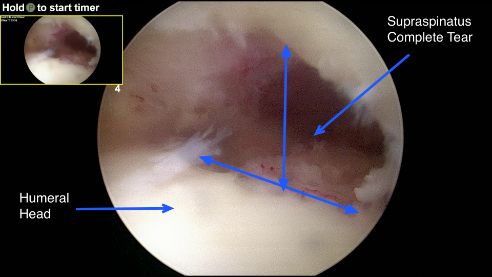
There is a hole right through the tendon, and in some cases the tendon has pulled away from the bone altogether. These tears can cause weakness when lifting the arm, as well as pain.
These develop gradually as the tendon wears over time, and are most often seen in people over 40. Many come on without any clear injury, and some cause few or no symptoms.
These happen suddenly, for example after a fall onto an outstretched arm, a dislocation or a heavy lifting injury. There is usually sudden pain followed by difficulty raising the arm.
Partial tears are grouped by which part of the tendon is affected. Each behaves slightly differently, which is why an accurate diagnosis matters.
These affect the underside of the tendon, the surface facing into the shoulder joint, and are the most common type of partial tear. They include the PASTA lesion (partial articular supraspinatus tendon avulsion), where the deep fibres of the supraspinatus peel away from their attachment on the bone.
These affect the upper surface of the tendon, next to the bursa. They are often linked to impingement, where the tendon rubs beneath the bony arch at the top of the shoulder (the acromion).
These lie within the substance of the tendon and do not reach either surface. They can be hard to see on a scan and are sometimes only found during keyhole surgery.
Partial tears are also described by their depth, from superficial fraying of the tendon surface to deep tears involving more than about half of the tendon's thickness. Depth is one of the main things that helps guide treatment: shallow tears usually settle with rehabilitation, while deeper tears are more likely to be considered for repair if they stay painful.
Reassurance
Many people, especially those with degenerative tears, compensate very well by strengthening the muscles around the tear. A tear on a scan does not automatically mean an operation.
A structured physiotherapy programme strengthens the deltoid, the remaining healthy rotator cuff muscles and the muscles that control the shoulder blade. Together they can take over much of the work of the torn tendon, restoring comfortable, useful movement.
Alongside exercise, changes to activity, simple pain relief and sometimes an injection can calm the shoulder enough for strengthening to move forward. Tears are also often found in shoulders that cause no pain at all, so the aim is to treat you, not the scan.
Your first appointment with Mr Jepson is about understanding your shoulder as a whole, so that any treatment fits your symptoms and your goals.
A conversation about how your symptoms started, what makes them worse, any injury, your work, sport and day-to-day activities, and treatment you have already tried.
A careful examination of your shoulder's movement and the strength of each rotator cuff muscle, which often points clearly to the tendon involved.
Imaging with an ultrasound or MRI scan confirms the type, size and depth of the tear and the quality of the tendon, so the options can be discussed with real clarity.
For some tears, a repair offers the best chance of a strong, comfortable shoulder. Mr Jepson may suggest surgery in these situations.
An acute tear after an injury, particularly in younger or active people, where early repair gives the tendon the best chance of healing back to bone.
Significant weakness or loss of function that makes everyday tasks, work or sport difficult.
Pain that continues despite a good course of physiotherapy and other non-surgical care.
Deeper partial tears that remain painful after rehabilitation.
Full-thickness tears at risk of getting bigger or of the tendon pulling back (retracting), which can make a later repair harder.
The decision is always made together. It depends on your age, activity levels and goals, the type and size of the tear, and the quality of the tendon, and there is never any pressure to choose an operation.
Most repairs are carried out arthroscopically, through small keyhole incisions using a camera. The torn tendon is brought back to its footprint on the bone and held in place with small anchors and strong sutures while it heals.
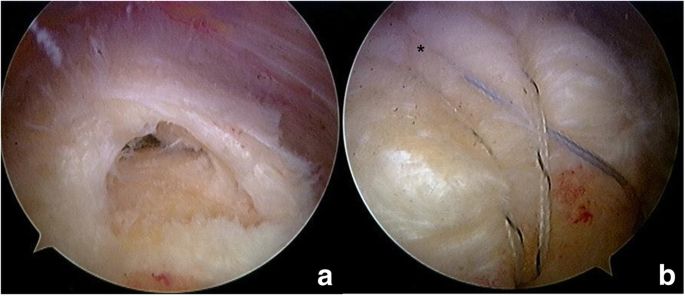
This video shows how the torn tendon is brought back to the bone and held in place with small anchors and stitches, all through keyhole incisions. It may help you picture what happens during your own operation.
In some tears, especially larger, longer-standing or repeat tears, the tendon can be thin or weakened, which makes a standard repair less secure while it heals. In these cases Mr Jepson may reinforce the repair with CuffMend, a specialist augmentation in which a thin patch is placed over the repaired tendon during the same keyhole operation, to add support and help the tendon heal onto the bone.
It is not needed for every tear. Mr Jepson decides whether to use it from your scans and what he sees at surgery, and will talk this through with you beforehand.
When the long head of the biceps tendon is also inflamed or damaged, it can be reattached lower down at the same operation to relieve pain at the front of the shoulder.
For a repair that has not healed or has torn again, a further keyhole repair may be possible once the tendon and bone have been carefully assessed.
For large tears that cannot be repaired, a graft is used arthroscopically to rebuild the top of the joint capsule and help keep the ball centred in the socket.
After a repair your arm is supported in a sling while the tendon starts to heal, followed by a staged physiotherapy plan that gradually restores movement and then strength. Recovery varies from person to person, and Mr Jepson will talk through what to expect for your tear at your consultation.
Before any operation, Mr Jepson talks you through the benefits, risks and alternatives. The practice uses Concentric, a secure digital consent system, so you can read about your operation at home, ask questions and record your decision. Your consent is confirmed again on the day. Read about consent in the day of surgery guide.
To see what happens on the day of your operation, from pre-assessment and fasting to the nerve block and going home, read the day of surgery guide.
If you are paying for yourself you can usually book directly. Most insurers ask for a GP referral letter and a pre-authorisation code before your first appointment, so it is worth checking with your insurer first. A letter from your GP or physiotherapist is always helpful if you have one.
Mr Jepson is recognised by Bupa, AXA Health, Vitality, Cigna and WPA only. Self-funded appointments are also available. You can read more about insurance and self-funding on the home page.
Not necessarily. Many people with rotator cuff tears, particularly degenerative tears, do very well with a structured rehabilitation programme that strengthens the muscles around the tear. Surgery is usually considered for acute injuries, significant weakness, or pain that continues despite good non-surgical care.
There is no fixed date. It depends on the operation you have had, how long your arm needs to stay in a sling, and how quickly your active movement comes back. To drive safely you need to be able to move your shoulder yourself, without help and without putting the repair at risk, and to react normally in an emergency so you do not cause injury to yourself or anyone else.
UK rules expect drivers to steer with both hands unless the DVLA has given specific permission otherwise, so your shoulder needs enough strength and movement to control the wheel. You are responsible for being in control of the car at all times, and should be able to show this if you are stopped by the police.
Do not drive while taking strong painkillers that can make you drowsy, such as opioids, or for at least 24 hours after an anaesthetic. You only need to tell the DVLA if problems affecting safe driving are likely to last more than three months after the date of your operation. Check with Mr Jepson, your physiotherapist and your motor insurer before you start driving again.
In short
For advice on wearing your sling and daily life after surgery, see the aftercare and sling guide.
Call the practice on 01604 633730 or email enquiries@upperlimb.co.uk and the team will find a time that suits you. Mr Jepson sees patients privately in Northampton and Kettering; see the clinic locations page for details of each hospital.
Other shoulder problems that can cause similar pain, weakness or stiffness.
Call to arrange a consultation, book online for Circle Three Shires Hospital in Northampton, or send a short email and the practice team will come back to you.
Read independent patient reviews on Doctify (opens in a new tab), iWantGreatCare (opens in a new tab) or Google reviews (opens in a new tab)

