
Hand & wrist · Patient guide
Thumb base (CMC joint) arthritis
Arthritis at the base of the thumb is a common cause of aching and weakness when you pinch, grip or twist. Mr Alistair Jepson, Consultant Orthopaedic Surgeon, explains what is happening in the joint and the full range of treatment, from simple measures to surgery.

Written by Mr Alistair Jepson
Consultant Orthopaedic Surgeon · GMC 4104128
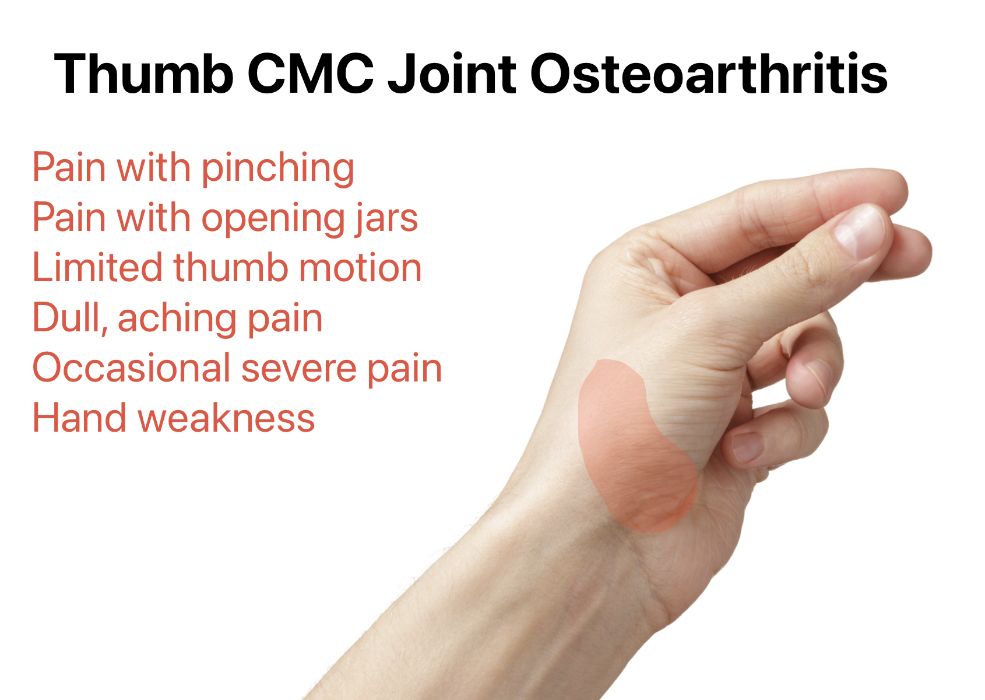
At a glance
- What it is
- Wear of the cartilage in the joint at the base of the thumb, where the thumb metacarpal meets a small wrist bone called the trapezium.
- Common signs
- An ache at the thumb base, with pain and weakness when you pinch, grip or twist, such as opening jars or turning keys.
- Diagnosis
- Usually made in a single visit, from your history, an examination of the thumb and a simple X-ray.
- First steps
- Most people start with a splint, strengthening exercises and hand therapy, with an image-guided injection for a painful flare.
- If surgery is needed
- Joint replacement, trapeziectomy or fusion, chosen together with Mr Jepson to suit your thumb and what you need your hands for.
- Recovery
- Varies by operation and is guided by a hand therapist. Joint replacement usually allows the earliest return to using the thumb.
What is the CMC joint?
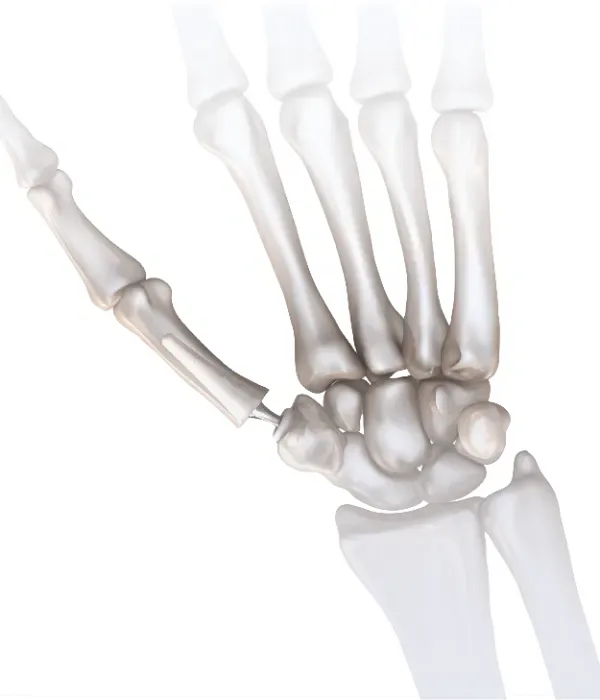
The carpometacarpal (CMC) joint sits at the very base of your thumb, where the thumb metacarpal meets a small wrist bone called the trapezium. Its saddle shape lets the thumb swing across the palm, which is what allows you to pinch and grasp.
That freedom of movement comes at a cost. Every pinch and grip concentrates force through this small joint, so it carries a heavy load through everyday life.
Over time the smooth cartilage that covers the joint surfaces can wear thin. As it does, the bones rub more directly, the joint becomes inflamed and loose, and pain follows. This is osteoarthritis of the thumb base.
Common symptoms
Symptoms often come on gradually and can vary from day to day. You may notice some or all of the following.
How it can feel
- An aching pain at the base of the thumb
- Pain when pinching or gripping
- Weakness in your grip or pinch
- Stiffness in the thumb
- Swelling, or a bump at the base of the thumb
Everyday tasks that become harder
- Opening jars and bottles
- Turning keys in a lock
- Doing up buttons and fastenings
- Writing or holding a pen for long
Getting a diagnosis
How thumb base arthritis is diagnosed
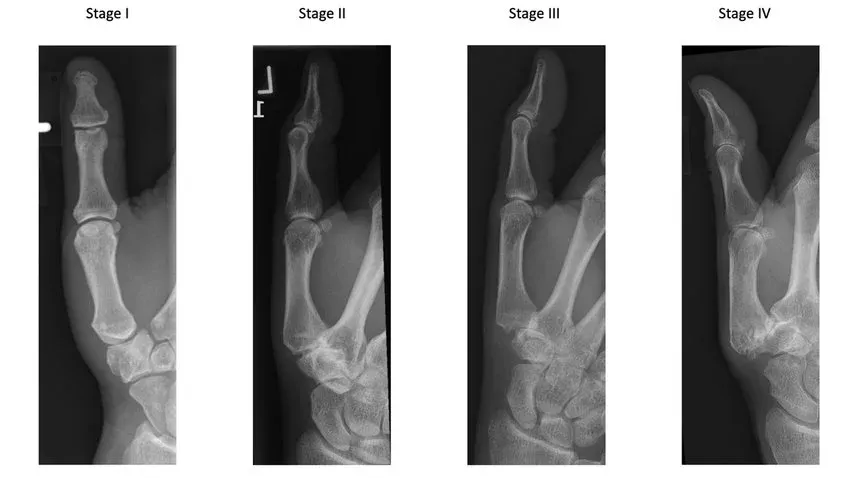
Most people can be diagnosed in a single consultation. A conversation about your symptoms, a careful look at the thumb and a simple X-ray usually give a clear picture of what is going on and how far the arthritis has progressed.
-
Consultation and history
Mr Jepson listens to how your symptoms started, what makes them worse and how they affect your work, hobbies and daily life.
-
Examining the thumb
A careful examination checks where the pain is, how the joint moves and how stable it is, and looks for other causes of hand pain.
-
X-ray
An X-ray confirms the diagnosis and shows how advanced the arthritis is, which helps guide the choice of treatment.
Treatment options
Treatment usually starts with simple, non-surgical measures. Surgery is considered when symptoms continue to limit your life despite these.
Non-surgical care
These measures often work best together: a splint to protect the joint, exercises to strengthen the muscles that support it and, when needed, an injection to settle a painful flare.
Activity changes
Adjusting how you grip, pinch and lift, and using simple aids for jars and keys, can reduce the strain on the joint.
Splints
A thumb splint supports and rests the joint, and can be helpful during flare-ups or at night. About the PUSH thumb brace
Hand therapy and strengthening
A hand therapist can teach joint-protection techniques and strengthening exercises to support the thumb, and advise on the right splint. Strengthening exercises
Simple pain relief
Painkillers or anti-inflammatory medicines, where they are suitable for you, can ease day-to-day symptoms.
Steroid injection
An image-guided injection into the joint can settle inflammation and ease pain. How well and how long it helps varies from person to person. About guided injections
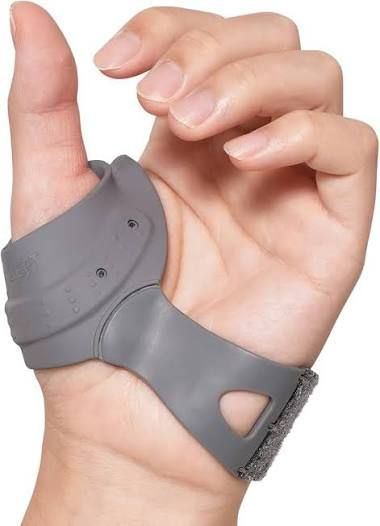
The PUSH thumb brace
The PUSH thumb brace is a soft, low-profile splint designed for arthritis at the base of the thumb. It supports and steadies the CMC joint while leaving the tip of the thumb and the fingers free, so you can keep using your hand for everyday tasks such as writing, typing, cooking or gardening.
Unlike a rigid rest splint, it is designed to be worn while you are active, during the tasks that usually bring on your pain. Mr Jepson can talk through whether it suits your thumb at consultation, and a hand therapist can help with sizing and fit.
Strengthening exercises for the thumb
The muscles in the web space between your thumb and index finger, mainly the adductor pollicis and the first dorsal interosseous, act as natural stabilisers for the base of the thumb. There is good evidence that strengthening them helps steady the CMC joint, ease pain and make pinching and gripping easier.
The key is to work these muscles with the thumb held in a stable, rounded position, so the exercise builds support without grinding the worn joint.
Working alongside your splint
The splint protects the joint during the tasks that bring on pain; the exercises build the muscles that support it. Take the splint off to do your exercises, then put it back on for heavier jobs or at night if you have been advised to. Over time, as the muscles strengthen, many people find they need the splint less.
-
Thumb web squeeze
Strengthens the adductor pollicis
- Place a small sponge, soft foam or rolled flannel between the pad of your thumb and the side of your index finger, near the knuckle.
- Keep the thumb gently rounded, with its middle knuckle slightly bent rather than bending backwards.
- Squeeze gently, hold for 5 seconds, then relax.
-
Index finger side press
Strengthens the first dorsal interosseous
- Rest your hand palm-down on a table with your fingers straight.
- Place a finger of your other hand against the thumb side of your index finger.
- Push the index finger sideways towards your thumb against that resistance, hold for 5 seconds, then relax. Later, a light elastic band around the index and middle fingers can provide the resistance.
-
Rounded thumb hold
Builds control of the thumb base
- Make a soft "C" shape with your thumb and fingers, as if holding a drinks can.
- Keeping that rounded shape, press the thumb gently outwards against the fingers of your other hand.
- Hold for 5 seconds without letting the thumb flatten, then relax.
How often
A typical starting point is 10 repetitions of each exercise, two to three times a day. Build up the hold time and resistance slowly, using therapy putty or bands as your hand therapist advises. Strength comes with steady practice over several weeks.
Doing them safely
- Mild discomfort that settles within an hour is fine; sharp pain, or more swelling the next day, means ease off.
- Do not let the thumb's middle knuckle bend backwards or collapse as you press.
- Rest the exercises during a painful flare, and for a couple of days after an injection unless advised otherwise.
These are general examples, not a personal programme. Check with Mr Jepson or a hand therapist before you start, especially after an injection or surgery, so the exercises can be tailored to your thumb.
Image-guided steroid injections into the CMC joint
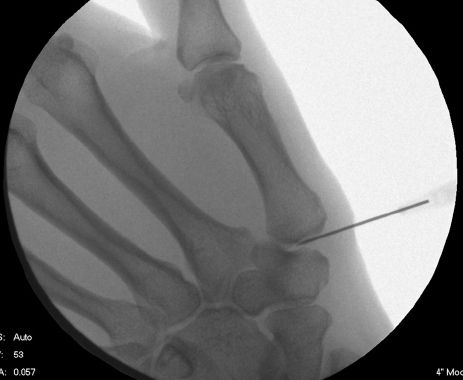
The thumb CMC joint is small, and once arthritis has narrowed it the space the needle needs to reach is very tight. Giving the injection with ultrasound or X-ray guidance lets the joint be seen on screen, so the steroid can be placed accurately inside the joint rather than in the soft tissues around it.
An injection eases inflammation and pain; it does not repair worn cartilage. It is often most useful during a flare-up, or to give you a comfortable window in which to build up your strengthening exercises.
Before
Let the team know if you take blood thinners, have diabetes, have any allergies, or feel unwell or have an infection on the day.
On the day
Your hand rests on a support and the skin is cleaned. The joint is found on the ultrasound or X-ray image, and a fine needle delivers the steroid, usually mixed with local anaesthetic. It takes only a few minutes.
Afterwards
The local anaesthetic may ease pain for a few hours. The steroid usually starts to work over a few days to a couple of weeks. Rest the thumb from heavy use for a day or two; your splint can help.
How often can it be repeated?
Injections are usually spaced several months apart and repeated only when an earlier one has helped. If the benefit becomes shorter each time, it is often the right moment to revisit other options, including surgery. The small risks are covered in the steroid injection question below, and you can read more about guided injections and scans.
Surgical options
Thumb CMC joint replacement
The worn joint surfaces are replaced with an artificial joint, aiming to keep the thumb's length and movement. More on joint replacement
Trapeziectomy
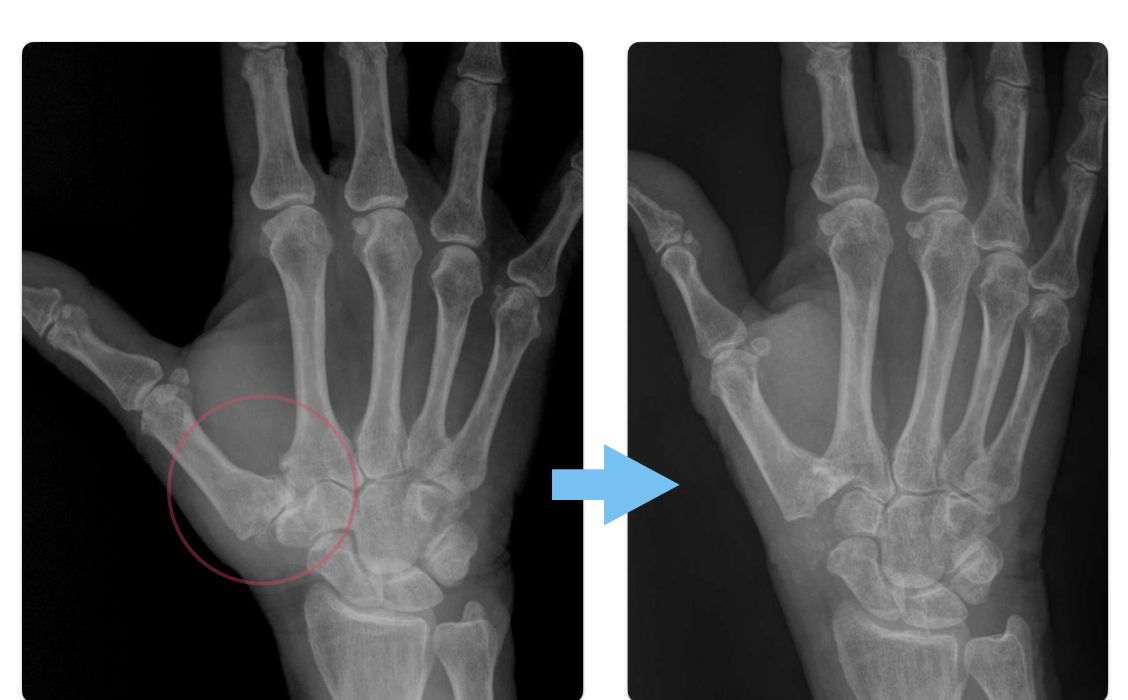
The trapezium, the small wrist bone that forms one side of the worn joint, is removed. The space left behind fills with scar tissue that supports the thumb. Recovery after trapeziectomy
Recovery after trapeziectomy
Recovery after trapeziectomy happens in stages, guided by a hand therapist. The timings below are typical rather than fixed: Mr Jepson and your hand therapist will give you a personal plan based on your hand, your progress and what you need your thumb for.

Watch: trapeziectomy explained
This short clip explains how a trapeziectomy relieves thumb base arthritis by removing the worn trapezium, so the painful bone-on-bone contact stops. Watch it alongside the recovery stages below, and bring any questions about your own thumb to your consultation.
-
Day of surgery
- Usually a day case, under a regional nerve block or a general anaesthetic.
- You usually go home the same day with your hand in a bulky dressing or plaster.
- Keep the hand raised from the start.
-
The first two weeks
- Keep the hand elevated to limit swelling.
- Move your fingers freely and keep the dressing dry.
- Your wound is checked and stitches removed at around 10 to 14 days.
-
Weeks 2 to 6
- You usually wear a removable thumb splint.
- Hand therapy starts gentle thumb movement, alongside light everyday tasks.
- Drive only once the splint is off and you can use the thumb safely.
-
Weeks 6 to 12
- The splint is usually weaned off.
- Strengthening exercises begin with your hand therapist.
- Most daily activities are usually resumed.
-
Beyond 3 months
- Pinch and grip strength keep improving gradually.
- They can take around 6 to 12 months to reach their best, so steady progress over this time is normal.
How it compares with joint replacement
Joint replacement usually allows earlier use of the thumb. Trapeziectomy has a longer splint and strengthening phase, but it does not rely on an implant. You can read about recovery after joint replacement below.
More practical advice
For the hospital day itself, from pre-assessment to going home, read the day of surgery guide. For wound care, dressings and looking after your splint at home, see the aftercare guide.
Thumb CMC joint fusion
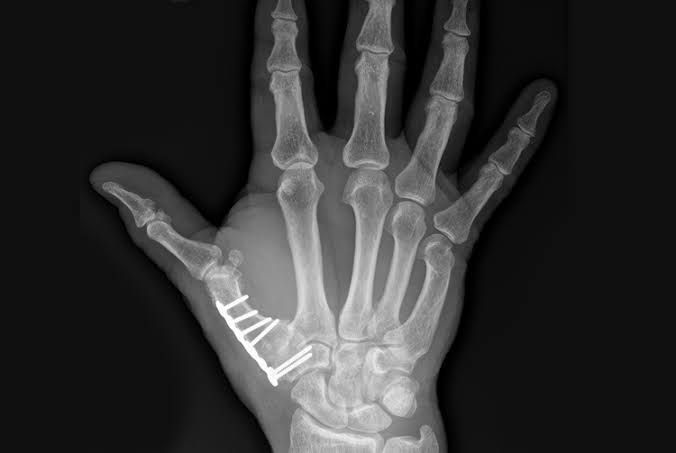
The thumb metacarpal and trapezium are joined so they heal as one bone. This gives a stable base for strong grip, at the cost of some thumb movement. Recovery after fusion
Recovery after fusion
After a fusion, the main job is letting the two bones join firmly. The outline below is typical; Mr Jepson will guide you on timings for your own thumb.
-
The first two weeks
Usually a day case. Your hand goes home in a padded plaster; keep it raised and move your fingers. The wound is checked at around two weeks.
-
While the bones join
The thumb is protected in a cast or splint for around 6 to 8 weeks, until the bones have begun to fuse. An X-ray checks progress before protection comes off; full fusion can take 3 to 4 months.
-
Rebuilding strength
Hand therapy eases stiffness and builds strength, with heavier gripping added gradually. Grip keeps improving over the following months.
Comparing the surgical options
Each operation can relieve pain from thumb base arthritis. They differ in what is done to the joint, how the thumb moves afterwards and how recovery runs. This side-by-side view is a general guide to help you prepare questions for your consultation.
| Feature | Joint replacement | Trapeziectomy | Fusion |
|---|---|---|---|
| What is done | The worn surfaces are replaced with a small ball-and-socket implant. | The trapezium is removed and the space fills with firm scar tissue. | The thumb metacarpal and trapezium are fixed together to heal as one bone. |
| Implant or metalwork | Yes: a cup in the trapezium and a stem in the metacarpal. | None left in the joint. | Wires, screws or a small plate hold the bones while they heal. |
| Movement afterwards | Aims to keep the thumb's natural length and movement. | Usually good movement; the thumb may sit slightly shorter. | Some thumb movement is given up in exchange for a stable base. |
| Recovery pace | Usually the earliest return to using the thumb. | Longer splint and strengthening phase; strength builds over many months. | The thumb is protected in a cast or splint for 6 to 8 weeks until the bones have begun to fuse. Full fusion can take 3 to 4 months. |
| Often suits | People who value movement and pinch strength, with suitable bone in the trapezium. | Most people with thumb base arthritis; a well-established operation. | People with heavy manual demands who need a strong, stable grip. |
| Points to discuss | Dislocation, loosening or wear of the implant over time. | A slower return of pinch strength. | The bones not joining, irritation from metalwork, and extra load on neighbouring joints. |
Joint replacement
- What is done
- The worn surfaces are replaced with a small ball-and-socket implant.
- Implant or metalwork
- Yes: a cup in the trapezium and a stem in the metacarpal.
- Movement afterwards
- Aims to keep the thumb's natural length and movement.
- Recovery pace
- Usually the earliest return to using the thumb.
- Often suits
- People who value movement and pinch strength, with suitable bone in the trapezium.
- Points to discuss
- Dislocation, loosening or wear of the implant over time.
Trapeziectomy
- What is done
- The trapezium is removed and the space fills with firm scar tissue.
- Implant or metalwork
- None left in the joint.
- Movement afterwards
- Usually good movement; the thumb may sit slightly shorter.
- Recovery pace
- Longer splint and strengthening phase; strength builds over many months.
- Often suits
- Most people with thumb base arthritis; a well-established operation.
- Points to discuss
- A slower return of pinch strength.
Fusion
- What is done
- The thumb metacarpal and trapezium are fixed together to heal as one bone.
- Implant or metalwork
- Wires, screws or a small plate hold the bones while they heal.
- Movement afterwards
- Some thumb movement is given up in exchange for a stable base.
- Recovery pace
- The thumb is protected in a cast or splint for 6 to 8 weeks until the bones have begun to fuse. Full fusion can take 3 to 4 months.
- Often suits
- People with heavy manual demands who need a strong, stable grip.
- Points to discuss
- The bones not joining, irritation from metalwork, and extra load on neighbouring joints.
This is a general comparison, not a recommendation for your own thumb. Mr Jepson will explain which options suit you, based on your examination, your X-ray and what you need your hands for.
There is no single right answer for everyone. The best option depends on you: how the arthritis affects your life, what you need your hands for, and what the examination and X-ray show. Mr Jepson talks through the choices with you at consultation so you can decide together.
A closer look
Thumb CMC joint replacement
Joint replacement is one of the surgical options for thumb base arthritis. This part of the guide explains the implant itself, what happens during the operation, and what recovery usually looks like, so you can come to your consultation with a clear picture.
Read Mr Jepson's interview on mastering the CMC joint (opens in a new tab)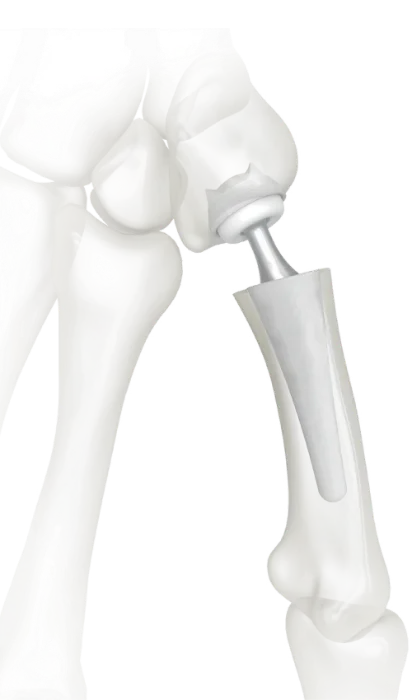
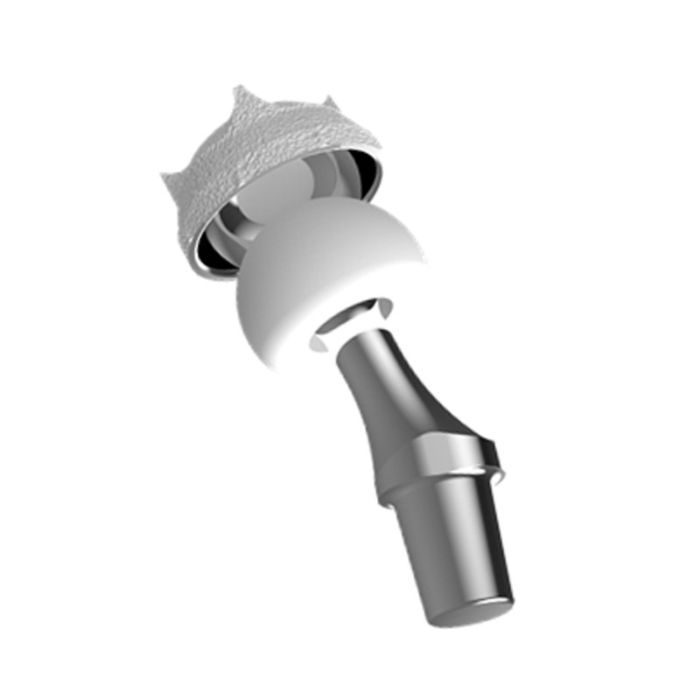
The thumb CMC implant: a cup for the trapezium, and a stem, neck and ball for the thumb metacarpal.
The implant
A thumb base (CMC) joint replacement is a small ball-and-socket implant. It replaces the worn joint between the trapezium, the small wrist bone at the base of the thumb, and the base of the thumb metacarpal. The aim is to keep the thumb's natural length and pinch strength, and to give you a joint that moves freely without pain.
A mini hip replacement for the thumb
The simplest way to picture a thumb CMC replacement is as a miniature hip replacement. Like the hip, the base of the thumb needs to move in many directions, so the implant follows the same ball-and-socket design principles: a cup fixed into the bone on one side, and a stem with a ball head on the other.
These principles have been developed and refined over many years in hip surgery, and are scaled down here to suit the much smaller bones at the base of the thumb.
-
The cup
Fixed into the trapezium, forming the socket of the new joint.
-
The stem
Fixed into the base of the thumb metacarpal, anchoring the implant in the thumb.
-
The neck and ball
Joins the stem to the cup, with a ball head that moves smoothly inside the socket.
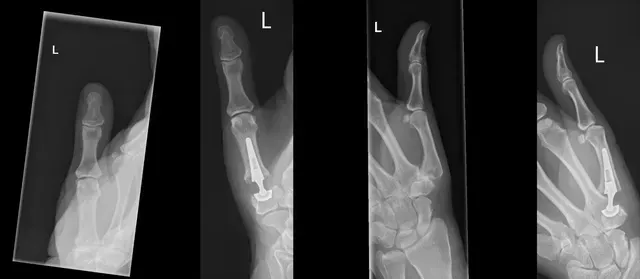
Many modern thumb implants also share a feature that was first developed for hip replacements: a dual mobility design. The ball sits inside a mobile liner, which itself moves within the cup. Having two moving surfaces rather than one gives the joint a wider range of movement and is designed to make it more stable, lowering the risk of dislocation.
Who it may suit
Joint replacement may be an option for adults with thumb base arthritis whose pain continues despite non-surgical care, particularly when keeping thumb movement and pinch strength matters to them. It is not suitable for everyone.
Because the cup needs a secure home, Mr Jepson checks the shape of your trapezium and the quality of the bone on X-ray, and sometimes on a CT scan, before recommending an implant. Where an implant is not the right choice for your thumb, trapeziectomy remains a well-established alternative, and he will talk through both with you. You can compare the surgical options in treatment options above.
Watch: thumb CMC joint replacement
This video shows how a thumb CMC joint replacement works. It is worth watching before your consultation, and Mr Jepson is happy to talk through any questions it raises about your own thumb.

The operation
The operation is usually done as a day case at Circle Three Shires Hospital in Northampton or Woodland Hospital in Kettering, so most people go home the same day.
It is usually carried out under a regional anaesthetic block, which numbs the arm, with or without sedation. A general anaesthetic is also an option, and the choice is made with you and the anaesthetist.
For the hospital day itself, from pre-assessment and fasting to going home, read the day of surgery guide.
-
A short incision
A short incision is made at the base of the thumb, taking care of the small nerves nearby.
-
Removing the worn surfaces
The joint capsule is opened and the worn joint surfaces are removed.
-
Preparing the bones
The trapezium is prepared to receive the cup, and the metacarpal is prepared for the stem.
-
Checking with a trial
A trial implant is fitted first and checked for length, movement and stability before the final components are placed.
-
Closing and protecting
The joint capsule is repaired over the implant, the skin is closed, and a padded dressing or splint is applied to protect the thumb while it settles.
Recovery
Recovery happens in stages and is guided by a hand therapist. The outline below is what typically happens; your own plan will depend on your hand, your bone quality and what you need your thumb for. For general advice on wound care, dressings and slings at home, see the aftercare guide.
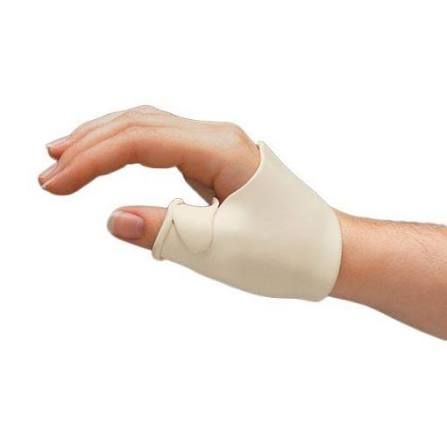
In the early weeks your thumb is protected in a light, made-to-measure thumb splint like the one pictured. It holds the new joint in a safe position while the soft tissues heal around the implant, and your hand therapist will show you when to wear it and when it can come off for exercises.
-
The first days
- Keep your hand raised to help limit swelling.
- Move your fingers gently and often from the start.
- Leave the padded dressing or splint in place and keep it dry.
-
The first few weeks
- The dressing or splint is typically needed for a short period only.
- Your wound is checked and any stitches that need removing are taken out.
- Your hand therapist makes you a splint and starts a graduated movement programme.
-
The following months
- Movement exercises move on to strengthening as the joint settles.
- Light everyday use comes first, with heavier gripping built up gradually.
- Comfort and strength typically keep improving over several months.
Driving and work
Driving: you can return to driving when you can control the thumb safely and comfortably, including in an emergency. It is sensible to check with your motor insurer too.
Work: when you go back depends on your job. Desk-based work is usually possible sooner than work that involves heavy gripping, lifting or tools. Mr Jepson will discuss timing for your own role.
Risks to discuss at consultation
Every operation carries some risk. Mr Jepson will go through these with you so you can weigh them up:
- Infection
- Wound problems or a sensitive scar
- Irritation of the small nerve near the thumb
- Stiffness
- Dislocation of the implant
- Loosening or wear of the implant over time
- Occasionally, the need for further surgery
Consent with Concentric
Before any operation, Mr Jepson talks through the benefits, risks and alternatives with you. The practice uses Concentric, a secure digital consent system, so you can read about your operation at home, ask questions and record your decision. Consent is confirmed again on the day. Read more in the day of surgery guide.
Watch the video
A short video to watch alongside this guide. If it raises questions about your own thumb, Mr Jepson is happy to talk them through with you at consultation.

Common questions
Short answers to the questions patients ask most often about thumb base arthritis.
More about Mr JepsonDo I need a referral?
If you are using medical insurance, your insurer may ask for a GP referral before authorising a consultation, so it is worth checking with them first. If you are paying for yourself, call the practice and the team will explain how to arrange an appointment.
Can I use my insurance?
Mr Jepson is recognised by major insurers including Bupa, AXA Health, Vitality, Cigna and WPA. Please contact your insurer for authorisation before your appointment. You can find fees and insurance information on the homepage.
Will I need surgery?
Not necessarily. Many people manage their symptoms with splints, strengthening exercises, hand therapy, pain relief or an injection. Surgery is considered when symptoms continue to affect your life despite these, and the decision is always made together.
Will a steroid injection help my thumb?
A steroid injection into the CMC joint can settle inflammation and ease pain, particularly in earlier arthritis or during a flare-up. It does not repair worn cartilage, so it eases the symptoms rather than changing the arthritis itself.
How much it helps, and for how long, varies from person to person: for some people the relief lasts a few weeks, for others several months. Because the joint is small, the injection is usually given with ultrasound or X-ray guidance so it reaches the right spot. You can read what happens in image-guided steroid injections above, and more about guided injections and scans.
The thumb may feel sore for a day or two afterwards. Mr Jepson will talk through the small risks with you, such as a temporary flare of pain, thinning or lightening of the skin at the injection site, a short-lived rise in blood sugar if you have diabetes and, rarely, infection. If injections help less each time, it may be the right moment to discuss other options, including a thumb brace, strengthening exercises or surgery.
How do I choose between joint replacement, trapeziectomy and fusion?
There is no single best operation for everyone. Each can relieve pain. They differ in how the thumb moves afterwards and how recovery runs.
- Joint replacement aims to keep the thumb's length and movement and usually allows the earliest return to using the thumb. It needs a trapezium with suitable shape and bone quality.
- Trapeziectomy is a well-established operation that leaves no implant in the joint. Pinch strength returns more slowly.
- Fusion gives a strong, stable base for heavy manual work, at the cost of some thumb movement and a longer period of protection while the bones join.
Mr Jepson will look at your examination and X-ray with you, and at what you need your hands for at work and at home, so you can decide together. You can see the three side by side in the comparison of surgical options.
How long does a thumb joint replacement last?
Modern thumb CMC implants are designed to last many years, but no artificial joint lasts forever, and nobody can promise exactly how long an individual implant will last.
Its lifespan depends on several things, including the quality of the bone in the trapezium, how securely the implant sits, the implant design and how heavily you use your hand. Over time an implant can loosen, wear or occasionally dislocate. Mr Jepson keeps an eye on it with follow-up appointments and X-rays, and you should get in touch if new pain, clicking or a change in how the thumb feels develops.
If a problem does develop, further surgery is usually possible, such as replacing part of the implant or converting to a trapeziectomy. You are welcome to ask at consultation about the implant Mr Jepson uses and its long-term track record. You can read more about the implant and its risks above.
How do I arrange a consultation?
Call the practice on 01604 633730 or email enquiries@upperlimb.co.uk. You can see where Mr Jepson consults on the clinic locations page.
Related conditions
Other hand and wrist problems that can cause similar pain, stiffness or lumps.
- Finger arthritis: DIP, PIP and MCP joints Worn, swollen or stiff finger joints and how they are treated. Read the guide
- Trigger finger and trigger thumb A finger or thumb that clicks, catches or locks when you bend it. Read the guide
- Carpal tunnel syndrome Numbness and tingling in the thumb and fingers, often at night. Read the guide
- Ganglion cysts of the wrist and hand Smooth, fluid-filled lumps near a joint or tendon. Read the guide
Talk to the practice about your shoulder, elbow, hand or wrist
Call to arrange a consultation, book online for Circle Three Shires Hospital in Northampton, or send a short email and the practice team will come back to you.
Read independent patient reviews on Doctify (opens in a new tab), iWantGreatCare (opens in a new tab) or Google reviews (opens in a new tab)