
Elbow
Olecranon bursitis
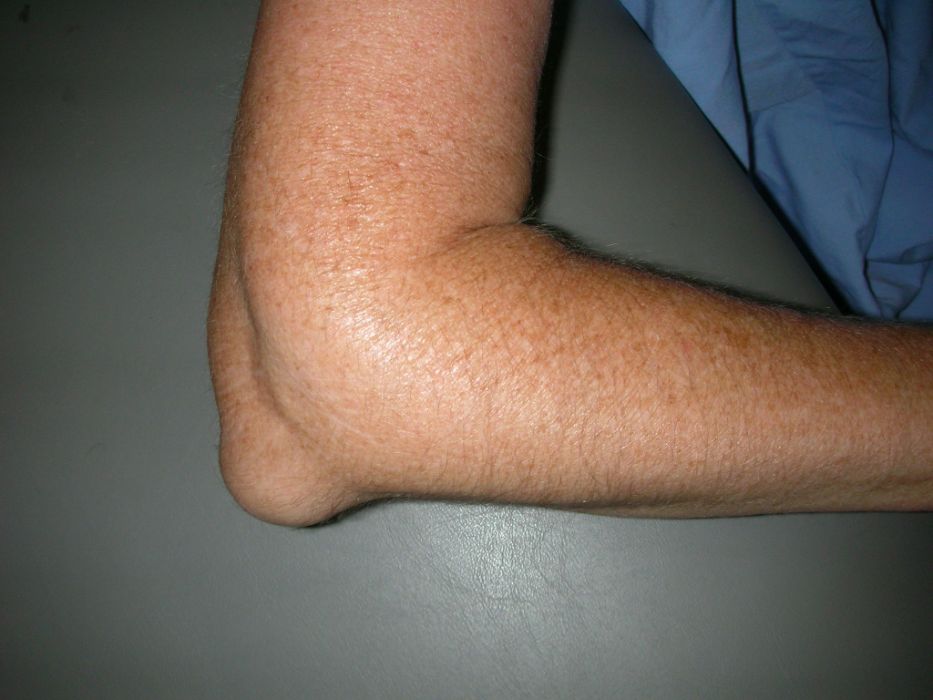
A soft, swollen lump at the point of the elbow is often olecranon bursitis. It can look alarming, but most cases are straightforward to manage once the cause is clear. This guide explains why it happens, which signs need prompt attention, and the treatment options Mr Jepson may discuss with you.

Written by Mr Alistair Jepson
Consultant Orthopaedic Surgeon · GMC 4104128
Understanding the condition
What is olecranon bursitis?
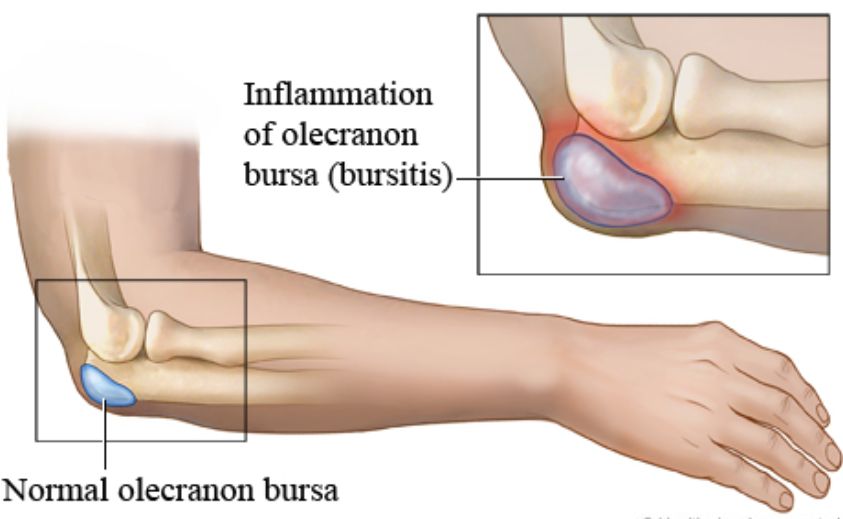
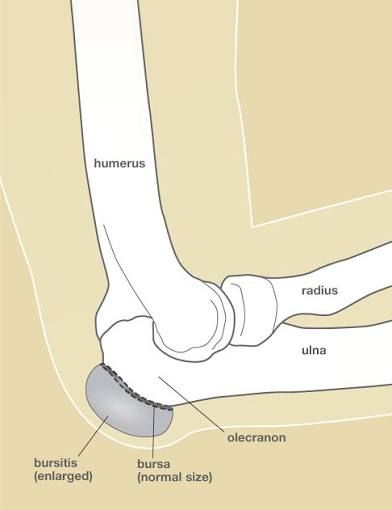
The olecranon is the bony tip of your elbow. Between that bone and the skin sits a bursa: a thin, slippery sac containing a tiny amount of fluid. Its job is to let the skin glide smoothly over the bone as you bend and straighten your arm.
Normally you would never know it is there. When the bursa becomes irritated, inflamed or infected, its lining produces extra fluid and the sac fills up, creating a swelling at the back of the elbow. This is olecranon bursitis.
Because the bursa sits outside the elbow joint itself, the joint usually keeps working well, even when the swelling looks quite large.
What you may notice
Symptoms
Olecranon bursitis tends to look more worrying than it feels. These are the signs people most often describe.
Swelling at the elbow tip
A swelling at the point of the elbow that can appear quite quickly, sometimes overnight, or build up gradually over weeks.
Tenderness when leaning
The area may feel tender, and leaning on the elbow, on a desk, armrest or car door, can be uncomfortable or painful.
A soft, egg-like lump
The swelling often feels soft and squashy, a little like a small egg or water balloon sitting under the skin.
Movement usually unaffected
Bending and straightening the elbow is usually close to normal, because the swelling sits outside the joint.
Why it happens
Causes
The bursa sits right under the skin at a point we lean on and knock often, so it is easily irritated. Common triggers include:
Repeated pressure
Leaning on the elbow for long periods, for example at a desk, while driving, or in trades that involve kneeling and leaning on the arms.
A knock or fall
A direct blow to the point of the elbow can cause bleeding or inflammation in the bursa, which then fills with fluid.
Gout
Crystals from gout can settle in the bursa and set off inflammation, sometimes with sudden redness and pain.
Inflammatory arthritis
Rheumatoid arthritis and other inflammatory conditions can make the bursa lining more prone to swelling.
Infection
Bacteria can reach the bursa, often through a graze, small cut or insect bite over the elbow. This needs prompt treatment.
No clear cause
Sometimes the swelling appears without any obvious reason. This is common and does not usually mean anything serious.
Important
When the bursa may be infected
Please don't wait it out
An infected bursa needs treating quickly so the infection does not spread. Seek medical advice the same day if you notice any of these:
- Redness that is spreading around the elbow or up and down the arm
- The elbow feeling hot to the touch
- Pain that is getting worse rather than better
- A cut, graze or wound over the swelling
- A fever, shivers or generally feeling unwell
Contact your GP, call NHS 111 or go to an urgent treatment centre for a same-day assessment. Once the infection has been dealt with, Mr Jepson is happy to see you to talk about the longer-term plan.
Your assessment
How it is diagnosed
Olecranon bursitis can usually be recognised in clinic. The aim of the assessment is to find out what is behind the swelling, especially whether infection or gout is involved.
-
History and examination
Mr Jepson will ask how and when the swelling started, about your work and hobbies, and about any gout or arthritis, then examine the elbow and skin.
-
Fluid testing when needed
If there is any doubt about the cause, a small sample of fluid can be drawn off with a needle and sent to the laboratory to look for infection or gout crystals.
-
Imaging where appropriate
An X-ray or ultrasound scan is sometimes helpful, for example to look for a bony spur on the tip of the elbow that keeps irritating the bursa.
First steps
Non-surgical treatment
When there is no sign of infection, simple measures are usually the place to start. Many non-infected cases settle gradually over a number of weeks.
Take the pressure off
Avoid leaning on the elbow wherever you can. Small changes to how you sit at a desk or rest your arm in the car can make a real difference.
Padding
A cushioned elbow pad or soft padding protects the area from knocks and pressure while it settles.
Gentle compression
A compression bandage or sleeve can help limit the swelling and discourage fluid from building up again.
Ice and rest
A wrapped ice pack for short periods, and resting the arm from aggravating activities, can ease discomfort in the early days.
Anti-inflammatory painkillers
Anti-inflammatory medicines can help if they are suitable for you. Check with your GP or pharmacist first, particularly if you have other health conditions.
Draining the bursa
Aspiration and injections
Some patients benefit from having the fluid drawn off. Mr Jepson will explain whether this is likely to help in your case.
Draining the fluid
Using a fine needle, fluid can be drained from the bursa in clinic. This can relieve the swelling and pressure, and the fluid can be sent for testing at the same time.
Antibiotics for infection
If infection is confirmed or suspected, antibiotics are needed. Depending on how severe it is, these may be tablets or, occasionally, treatment in hospital.
Steroid injection, used with care
For some non-infected cases, a steroid injection may be considered. It carries risks, including infection and thinning of the skin over the elbow, so Mr Jepson will talk through whether it is suitable for you.
It is worth knowing that the fluid can build up again after draining, particularly if the elbow continues to take pressure.
Surgery
Bursectomy
Most people never need an operation for olecranon bursitis. Surgery to remove the bursa is reserved for swelling that keeps returning or does not settle with other treatment.
When surgery is advised
- The bursitis keeps coming back despite treatment
- Swelling that persists and is troublesome day to day
- An infection that is not settling with antibiotics and drainage
- A bony spur on the tip of the elbow that repeatedly irritates the bursa
What the operation involves
A bursectomy removes the bursa through an incision at the back of the elbow. Where a bony spur is contributing, it may be smoothed down at the same time. It is usually carried out as a day case, so you can normally go home the same day.
Before you decide, Mr Jepson will talk you through the anaesthetic options, the possible risks, such as problems with wound healing, and what to expect afterwards, so you can make the choice that is right for you.
Consent with Concentric
Before any operation, Mr Jepson talks you through the benefits, risks and alternatives. The practice uses Concentric, a secure digital consent system, so you can read about your operation at home, ask questions and record your decision. Your consent is confirmed again on the day. Read more in the day of surgery guide.
To see what happens on the day of your operation, from pre-assessment and fasting to the anaesthetic and going home, read the day of surgery guide.
After a bursectomy
Recovery
Everyone heals at their own pace, so treat this as general guidance. You will be given personal advice for your own recovery before you go home.
The first few days
The elbow is covered with a dressing and sometimes a splint or padded bandage. Keeping the arm raised helps to reduce swelling.
Protecting the wound
Avoid leaning on the elbow while the wound heals, and keep the dressing clean and dry as advised.
Wound check
The wound is usually checked, and any stitches removed, at around ten to fourteen days.
Back to normal use
Everyday use of the arm builds up gradually as comfort allows. If extra support would help, you may be guided by the therapists Mr Jepson works with; you can meet Mr Jepson and his team.
Driving and work
When you can drive or return to work depends on your comfort, how the wound is healing and the kind of work you do. Mr Jepson will advise you.
Your questions
Common questions about elbow bursitis
Will it go away on its own?
Many cases without infection settle gradually over weeks, especially if you avoid leaning on the elbow. If there are any signs of infection, such as spreading redness, heat or feeling unwell, seek medical advice the same day rather than waiting.
Should the fluid be drained?
Not always. Draining can relieve a large or uncomfortable swelling and allows the fluid to be tested for infection or gout, but the fluid can build up again. Mr Jepson will explain whether it is worthwhile for you.
Is it the same as tennis elbow?
No. Tennis elbow affects the tendons on the outer side of the elbow and causes pain when gripping or lifting. Olecranon bursitis is a swelling of the bursa at the point of the elbow, at the back.
Can it come back?
It can, particularly if the elbow keeps taking pressure or there is an underlying cause such as gout or a bony spur. Protecting the elbow and treating any underlying condition helps reduce the chance of it returning.
Do I need surgery?
Most people do not. A bursectomy is considered when the bursitis keeps coming back, the swelling persists and is troublesome, an infection does not settle, or a bony spur keeps irritating the bursa. Mr Jepson will go through the options with you.
Where can I be seen?
Mr Jepson sees private patients at Circle Three Shires Hospital in Northampton and Woodland Hospital in Kettering. You can find addresses and directions on the clinic locations page.
Related conditions
Other elbow problems that can cause pain, swelling or stiffness around the joint.
- Elbow arthritis and elbow arthroscopy Pain, stiffness or locking inside the elbow joint, and keyhole surgery. Read the guide
- Tennis elbow and golfer's elbow Tendon pain on the outer or inner side of the elbow when gripping. Read the guide
- Cubital tunnel syndrome Ulnar nerve pressure at the elbow, with tingling in the ring and little fingers. Read the guide
- Distal biceps tendon rupture A sudden pop at the front of the elbow when lifting, often with bruising. Read the guide
Talk to the practice about your shoulder, elbow, hand or wrist
Call to arrange a consultation, book online for Circle Three Shires Hospital in Northampton, or send a short email and the practice team will come back to you.
Read independent patient reviews on Doctify (opens in a new tab), iWantGreatCare (opens in a new tab) or Google reviews (opens in a new tab)